Yes, altitude affects cars. At Granby's elevation of roughly 8,000 feet the air holds noticeably less oxygen than at sea level, so a naturally aspirated engine makes less power, turbocharged engines compensate better, and the cooling system works at a lower boiling point unless its pressure cap is sound. The practical response is simple: keep the cooling system healthy, keep air and fuel filters fresh, and buy fuel by the owner's manual rather than by what the pump offers. You do not need special parts for altitude, but you do need parts in good condition.
What altitude changes
Air pressure falls as you climb. Granby sits near 8,000 feet, with passes much higher; Berthoud Pass tops out near 11,300 feet and Trail Ridge Road reaches 12,183 feet. Four effects matter for car owners.
- Less engine power. An engine burns a mixture of air and fuel. Thinner air means less oxygen per intake stroke, so a naturally aspirated engine loses power as elevation rises. Modern fuel injection adjusts the mixture automatically, so the engine runs well but with less muscle, particularly on long climbs and when towing.
- Turbo engines hold up better. A turbocharger compresses the incoming air, which offsets part of the loss, though it works harder.
- Lower boiling points. Water boils at a lower temperature at altitude: about 212°F at sea level, but roughly 198°F near 7,500 feet according to the elevation table in Wikipedia's boiling point article. A cooling system is pressurized to raise the boiling point, so a weak radiator cap or small leak matters more.
- Stronger sun and drier air. Ultraviolet exposure is higher at altitude, which ages rubber, plastics and paint faster.
Does a car lose power at high altitude, and does it need adjusting?
A car that loses power at high altitude is behaving normally: with less air pressure filling the cylinders, a naturally aspirated engine makes less power the higher it goes, while turbo and supercharged engines give back part of that loss. A modern fuel-injected car needs no adjustment, because its computer reads the air and corrects the fuel automatically.
A driver arriving from sea level will notice slower acceleration and longer passing distances; that is the thin air, not a fault. Older carbureted vehicles are the exception, since they have no computer to correct the mixture, so follow the manual or ask a specialist about mixture settings. A real fault looks different: a check-engine light, rough idle, stalling or a sudden drop in power at any altitude.
The cooling system at altitude
The radiator cap keeps the system under pressure, which raises the temperature at which coolant boils. A tired cap lets pressure escape and coolant boil sooner, often on a long climb with the air conditioner running or while towing. Check these items:
| Part | What to check | When |
|---|---|---|
| Radiator cap | Seal condition; pressure rating matches the manual | Replace if worn or every few years |
| Coolant | Freeze and boil protection, color and condition | Test each fall; replace per the manual |
| Hoses | Soft spots, cracks, swelling | Before winter and before summer trips |
| Thermostat | Opens at the right temperature | Replace if the engine runs too hot or too cold |
| Radiator and fan | Clear fins, working fan or clutch | Clean annually; fix noises or fan failures |
| Water pump | Leaks, wobble, noise | Often replaced with the timing belt |
If the temperature gauge climbs on a grade, turn the heater to full hot, which moves some engine heat into the cabin, and pull over where it is safe. Never open a hot radiator cap. A coolant mix should be set by the owner's manual; a plain 50/50 blend is common but not universal. The engine block heater guide covers freeze protection in the same system, and the winter car care checklist for mountain drivers puts coolant, hoses and the rest of the pre-winter checks in one list.
Filters, fuel and octane at altitude
A clogged air filter hurts more where the air is already thin. Check it more often than the schedule demands, especially after dusty summer days on unpaved roads.
Octane is the most common fuel question. At some high-elevation stations, 85 octane is sold as regular because thinner air lowers the chance of engine knock, as Wikipedia's octane rating article describes. That rule of thumb dates from carbureted engines: the U.S. Department of Energy's fueleconomy.gov states it does not hold for modern gasoline engines, so use the fuel your manufacturer recommends even where 85 is available. If the manual calls for midgrade or premium, buy it; if it only says the car runs better on higher octane, the choice is yours, and the extra cost typically exceeds the fuel savings.
Tire pressure: temperature matters more than altitude
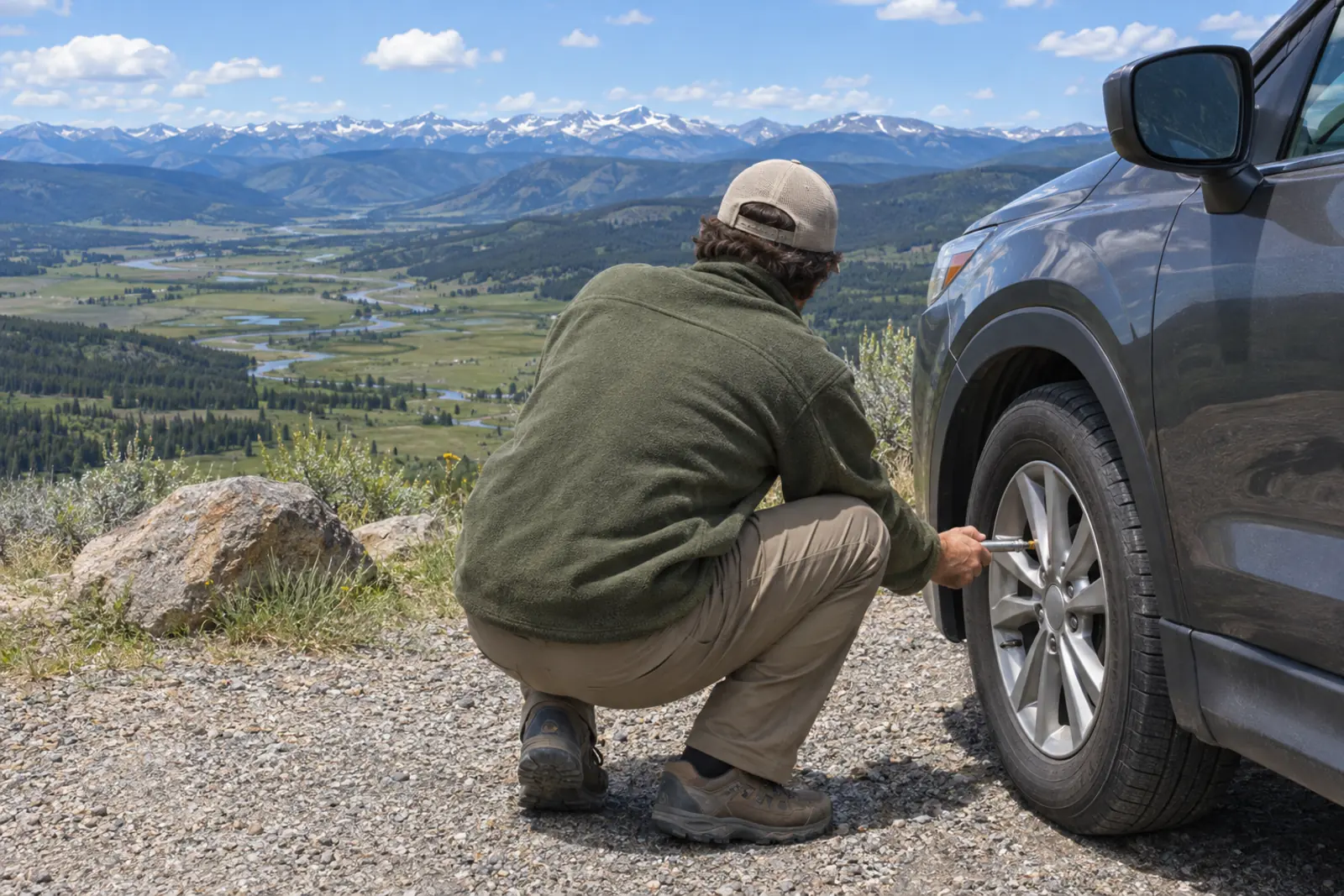
Temperature is the bigger factor for tires. Pressure drops by roughly 1 psi for every 10°F drop in air temperature, so a tire set on a mild afternoon can be several pounds low on a freezing morning. Check it cold, inflate to the number on the placard in the driver's door jamb rather than the maximum on the sidewall, and recheck after large temperature swings. Tread and traction rules are covered in the guide to winter tires and the traction law.
Brakes and transmissions on grades
Altitude does not weaken brakes, but the steep grades around Grand County stress them. The guide to brakes for mountain descents explains why gear selection and brake fluid matter. Automatic transmissions also run hotter under load on long climbs, and a regular fluid service pays off, especially if you tow.
Battery, paint and underbody in the mountains
Cold, not thin air, is what drains a battery on a Grand County morning; the car battery cold weather guide explains cold-cranking amps and testing. Winter road treatments are another hard-on-metal factor in the mountains, so the guide to magnesium chloride and underbody rust is worth reading before the first storm.
Oil, emissions and warning lights
A check-engine light that appears after a climb deserves a scan, because thin air can reveal weak sensors, a worn oxygen sensor or a vacuum leak. Many parts retailers read basic codes for free. Do not clear a code without learning what caused it. Use the VIN-based method to buy the right sensor, and consider OEM parts for emissions-related sensors; see OEM versus aftermarket for why.
Driving habits that help
- Plan for slower climbs when towing or loaded, and downshift early to avoid lugging the engine.
- Avoid sudden hard acceleration with a cold engine.
- Keep the fuel tank at least a quarter full in winter, in case of closure delays on a pass.
- Carry extra coolant or water in summer for long climbs.
- Do not use the air conditioner on the steepest summer climbs if the temperature gauge is rising.
Frequently Asked Questions
How much power does a car lose at 8,000 feet?
A naturally aspirated engine loses a meaningful share of its sea-level power, and the exact figure depends on the engine. Turbocharged engines lose less because the turbo compresses the incoming air. The loss is normal and does not mean something is broken.
Does high altitude hurt a car engine?
No. Thin air reduces power but does not damage a healthy engine. Cooling-system weakness and a clogged air filter are the problems that altitude makes more noticeable, so keep both in good shape.
Do I need special parts for high altitude?
Generally not. Modern fuel injection adapts automatically. What helps is keeping the cooling system, filters, spark plugs and sensors in good condition.
Does tire pressure change at high altitude?
A gauge reads relative to the surrounding air, so altitude has only a small effect on the reading you inflate to. Temperature changes matter more, and pressure drops with the cold. Check regularly with a good gauge and follow the door-jamb placard.
Why does my engine overheat on mountain climbs?
Long grades, load, hot weather and a lower boiling point for coolant can combine to stress a cooling system. Weak caps, old coolant, clogged radiators and failing fans make it worse. Have the system tested.
Should I use higher octane gas in the mountains?
Only if the owner's manual requires it. The U.S. Department of Energy's fueleconomy.gov advises using the fuel the manufacturer recommends even where 85 octane is sold, and notes higher octane is rarely worth the extra cost in normal driving. Follow the manual.