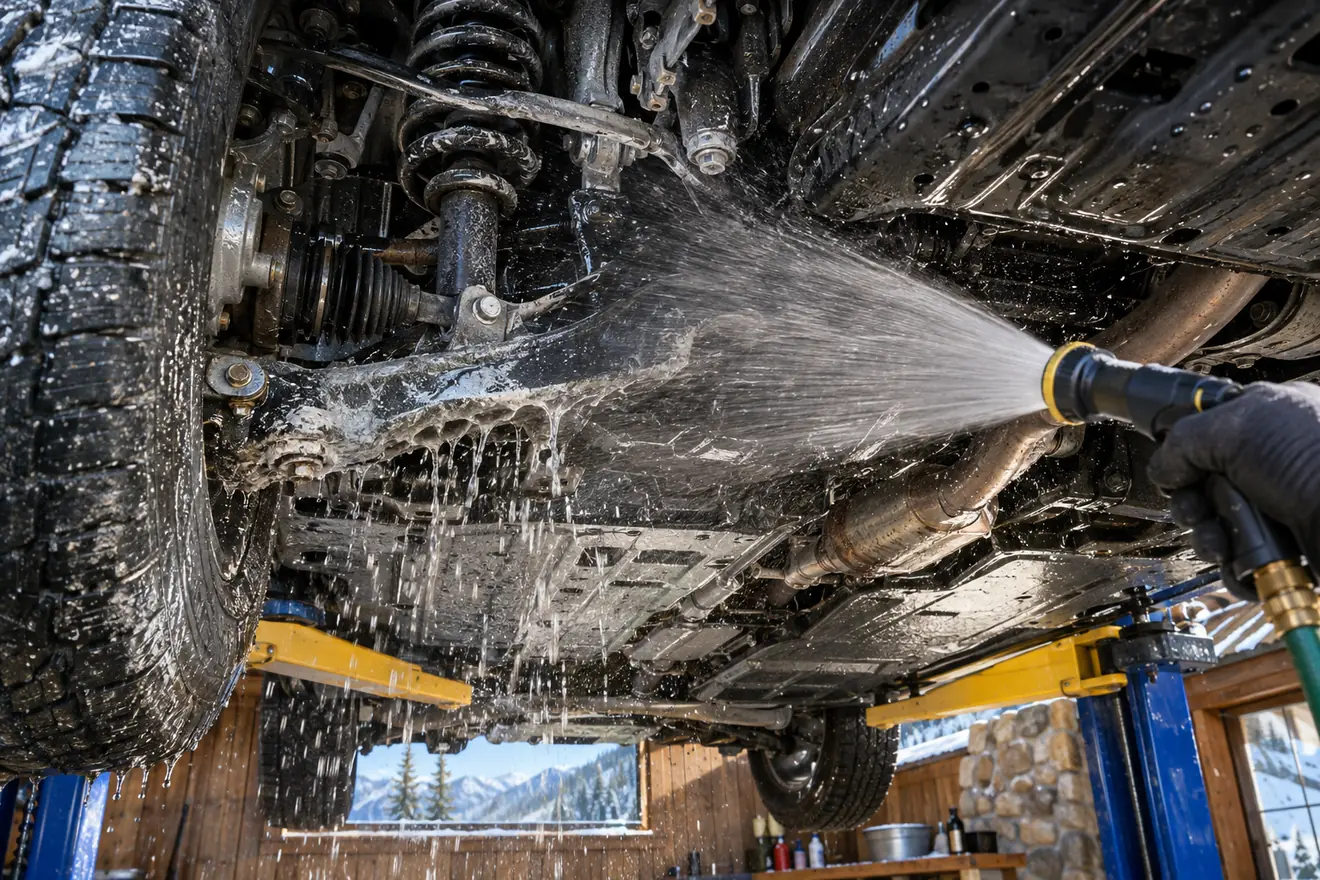
Yes, over time magnesium chloride and other chloride deicers can damage a car. Mountain roads in Colorado are treated with chloride-based products, including magnesium chloride brine, and the residue clings to the underside of a vehicle, where it speeds corrosion on brake lines, fuel lines, suspension parts and frame components. How much damage you get depends less on the exact product than on how long the brine stays on the metal. The most effective defense is routine: rinse the underbody regularly through winter, fix paint chips and rust spots early, and inspect the parts that rust can turn dangerous before the season starts and again when it ends.
What is on the road
Highway crews use sand for traction and chemical deicers to keep ice from bonding to the pavement. Magnesium chloride is among the products used in Colorado, and the state transportation department has funded research into how corrosive deicers are to vehicle components. A CDOT-sponsored study from the early 2000s examined whether magnesium chloride is more corrosive to vehicle parts than ordinary salt, and the state's deicer specifications set corrosiveness limits on aluminum and stainless steel. The research record on mild steel, the metal in most frames and brake lines, is less settled, so a cautious approach is sensible whichever product is on the road. Liquid brines also stick to surfaces and stay damp longer than dry salt, so they keep working on metal after the storm has passed.
Is mag chloride bad for your car, or is all road salt the same?
Magnesium chloride is used in three main ways: sprayed on the road before a storm so snow and ice cannot bond (anti-icing), sprayed onto dry salt as it is spread so the salt stays on the road (prewetting), or mixed with salt before it is loaded on trucks, according to the general reference on magnesium chloride. Brine applied ahead of a storm as anti-icing means the road can be wet with chloride before you drive on it, and your tires throw it up onto the underbody.
For a driver the practical point is the same for every chloride: salt water causes steel to rust much faster than ordinary rain water. A study from 1991 (Rendahl and Hedlund), as summarized in the article on road salt, reported about 50% less cosmetic corrosion on cars driven on unsalted roads than on cars driven on salted roads. Whether magnesium chloride is slightly better or worse than sodium chloride on steel matters less than the habit of getting it off.
Where the damage shows up first
| Area | What happens | Why it matters |
|---|---|---|
| Brake lines and fittings | Steel lines rust from the outside | A rusted line can fail without warning |
| Calipers, slide pins, brake hardware | Corrosion seizes moving parts | Uneven wear, heat, long stopping distances |
| Fuel lines and tank straps | Surface rust works through | Leaks; a fire risk |
| Frame, subframe and cross members | Scale and flaking | Structural strength falls over years |
| Exhaust system | Rust-through at joints and hangers | Noise, leaks, loose parts |
| Rocker panels, door bottoms, wheel wells | Paint chips let rust in; moisture is trapped | Visible rust and body damage |
| Electrical connectors and grounds | Corrosion at terminals | Random faults and warning lights |
| Wheels, especially aluminum | Pitting and finish damage | Slow air leaks at the bead |
Corrosion collects in nooks where road dirt and water stay packed against the metal, such as seams, pinch welds, behind trim and inside the frame rails. That is why a car can look clean from the outside and still be flaking underneath. Battery terminals and cable ends are another early victim; the car battery cold-weather guide covers cleaning and testing them.
How to wash salt off a car in winter
- Rinse the underside after storms, and at least every couple of weeks through the winter when the roads are being treated. A self-serve bay with an underbody spray is ideal. A quick rinse is much better than none.
- Choose a mild day. If the temperature is well below freezing, water can freeze in door seals, locks and brake parts. Drive a few minutes afterward and test the brakes gently to dry them.
- Aim at the traps. Wheel wells, rocker panels, behind bumpers, around the suspension and above the exhaust.
- Use ordinary pressure near electrical parts. Do not blast water into connectors, sensors or the engine bay with a very high-pressure wand.
- Wash the paint too, and open the doors to wipe the door jambs, where brine collects.
- Do a thorough clean in spring, when the last of the brine is gone.
If you wash at home, keep soapy runoff out of storm drains. Check your town's rules on washing. The winter parts checklist sets this routine into a seasonal plan.
Protection: coatings and sprays
- Wax or sealant on paint. Helps rinse brine off the body, but it does not protect bare metal or chips.
- Oil- or wax-based underbody coatings. Applied to clean, dry metal, they seal moisture and brine out. They need periodic touch-ups, and sloppy application can trap moisture, so choose an experienced applicator and ask what products are used. Wax can fail to reach inside spot-welded seams or through thick rust, and it goes on more easily in warm weather than in cold.
- Rubberized undercoating. A hard film that can crack and trap moisture beneath it. Many corrosion specialists prefer non-hardening products.
- Touch-up paint. A chip on a rocker or door edge is the start of a rust bubble. Clean it, prime it and paint it.
- Fluid film or dielectric grease on electrical connectors that are exposed.
- Electronic rust-protection boxes. Skip them. The reference article on vehicle rustproofing notes there is no peer-reviewed scientific testing supporting these devices.
Treat these as aids, not guarantees, and verify product claims with the manufacturer. Modern cars already leave the factory with an electrocoat primer that covers nearly all metal surfaces, so aftermarket coatings mostly matter for seams, repairs, older vehicles and areas where the factory finish has been chipped or worn through.
Inspect rust-prone parts every year
- Look at brake lines along the frame for flaking, swelling or wet spots. Tap them with a screwdriver handle: a solid ring is good, a dull thud or flaking means trouble.
- Check calipers and rotors for uneven wear.
- Look at the fuel tank straps and lines.
- Inspect the exhaust for holes or soot streaks.
- Examine the frame near the rear axle and suspension mounts.
The brake side of this inspection ties in with the guide to brakes for mountain descents. If a part needs replacing, the guide to OEM, aftermarket, used and remanufactured parts helps you choose, and finding car parts by VIN shows how to confirm the exact line or strap for your vehicle. Never buy used brake lines or fuel lines.
Surface rust or structural rust?
Light surface rust on a bolt head or the outside of a bracket can be cleaned, treated and sealed. Rust that has flaked a frame rail, softened a brake line or eaten through a tank strap is a different problem: structural rust is cut out and replaced rather than just treated, and brake and fuel lines are replaced, not patched. Have a qualified shop look at anything you are unsure about before you drive the vehicle in the mountains.
Used vehicles and rust
If you shop for a used vehicle or a used part, rust deserves a close look. A vehicle that spent years where deicers are used may look clean on top and be ruined underneath. Inspect it on a lift or with a flashlight and mirror. If you are buying a used engine or transmission from a donor vehicle, see the buying guide for what to ask about the donor's condition.
Frequently Asked Questions
Is magnesium chloride worse for cars than salt?
The research is mixed and depends on the metal. CDOT-sponsored studies examined the question and the state set limits on how corrosive its deicers can be to aluminum and stainless steel. Either way, rinsing the underside is wise.
How often should I wash my car in winter?
Every one to two weeks is a good target when treatments are heavy, with an underbody rinse. If it stays well below freezing for long periods, wash when you get a milder day.
Does undercoating stop rust?
It slows it when done well on clean metal, and fails when applied over rust or when moisture is trapped beneath it. Non-hardening wax- or oil-based products are often favored, but results depend on the application.
Can road deicers damage brakes?
Yes, indirectly. They corrode steel brake lines and cause calipers and slide pins to seize, which leads to uneven wear and heat. Have brakes inspected before winter and again in spring.
Should I wash my car when it is below freezing?
You can, but be careful. Water can freeze in locks, door seals and brake parts. Use a mild-weather window where possible and dry the seals, then test the brakes gently afterward.
Do electronic rust protection devices work?
There is no peer-reviewed scientific testing that supports them, so treat the marketing claims with caution. Regular rinsing, prompt touch-up of chips and a well-applied wax- or oil-based coating are the methods with a track record.
Can a car wash with an underbody spray remove magnesium chloride?
It helps by washing off loose residue, which is the goal, but a spray is unlikely to reach every seam and cavity. Repeating the rinse through the season and finishing with a thorough spring clean does more than one perfect wash.