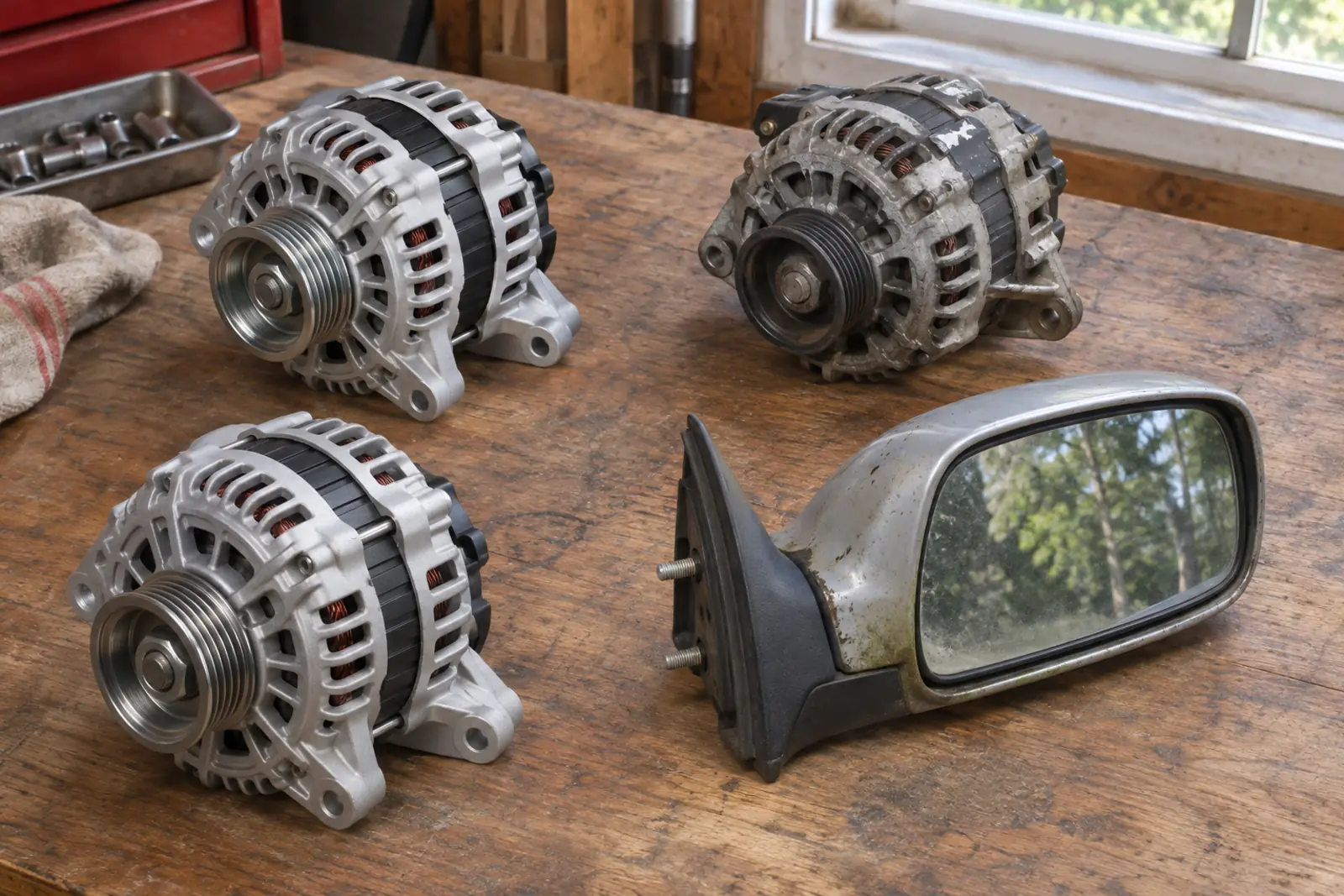
In the OEM vs aftermarket parts debate, neither side wins everywhere. For most repairs on an ordinary daily driver, a quality aftermarket or remanufactured part is a sound choice, and a used part is fine for non-wear items such as mirrors, trim and body panels. OEM parts make the most sense when fit is critical, when the vehicle is still under warranty, or when the aftermarket options are poor. The right answer changes with the part, the age of the car and how hard you use it, which in the mountains of Grand County means cold starts, long grades and salted roads.
The four kinds of parts, in plain terms
Shoppers meet four labels again and again. They sound similar, but they describe very different products.
- OEM (original equipment manufacturer). The part made for the automaker, usually sold in a branded box through a dealer parts counter. The same part is often also sold in the supplier's own box, which is sometimes called OES (original equipment supplier) and is typically cheaper.
- Aftermarket. New parts made by companies other than the automaker's contracted supplier. Quality runs from excellent to poor, and the brand matters far more than the label.
- Used, recycled or salvage. A working part taken from another vehicle. It was an original part once, but it carries the wear of its first life.
- Remanufactured (and rebuilt). A used core that has been disassembled, cleaned, inspected and fitted with new wear components. Remanufactured is generally the stricter term, with parts brought back to specification. Rebuilt can mean only that the failed pieces were replaced.
OEM vs aftermarket parts: how they compare
| Type | Typical cost | Fit and quality | Warranty | Best for |
|---|---|---|---|---|
| OEM | Highest | Consistent, made to the original specification | Usually 12 months or more; verify | Sensors, electronics, safety parts, newer vehicles |
| Aftermarket (reputable brand) | Low to mid | Often equal, sometimes improved; varies by brand | Ranges from 90 days to lifetime; read the terms | Brakes, filters, suspension, batteries, wipers |
| Used / salvage | Lowest | Original fit, unknown wear | Often 30 to 90 days; some sold as is | Body panels, mirrors, trim, older vehicles |
| Remanufactured | Mid | Restored to spec when done properly | Often comparable to new; verify | Alternators, starters, steering racks, transmissions |
Those cost labels are relative, not quotes. Prices change by vehicle and region, so compare current listings before you decide.
Are aftermarket parts as good as OEM?
Sometimes, and it depends on the brand and the part. A reputable aftermarket maker can match the original or fix a known weakness, while a no-name part sold only on price can fit badly or wear out early. Judge the maker and the warranty, not the word "aftermarket." For body and collision parts, third-party certification exists: the Certified Automotive Parts Association (CAPA) runs a certification program for replacement collision-repair parts, and its seal search lets you look up a certified part.
When OEM is worth the premium
Electronic parts are where aftermarket quality gaps show up most. Crankshaft and camshaft position sensors, mass airflow sensors, and modules that talk to other modules sometimes work poorly or set warning lights when they are not made to the original specification. If a cheap sensor has already failed once, step up to OEM or the original supplier's version. The same goes for airbag components and anything else tied to safety systems. Some engines are also fussy about timing components and water pumps; an interference engine that skips a belt can destroy itself, so the extra cost of a trusted belt kit is cheap insurance.
When aftermarket is the smarter buy
For parts that wear out on schedule, a good aftermarket brand often matches the original and sometimes beats it. Brake pads and rotors, filters, wiper blades, batteries, suspension bushings and shocks are all categories with strong choices at fair prices. In a cold, high-altitude area you may even want something the factory did not install, such as a battery with more cold-cranking amps, or winter-rated wipers. Details in the guides on batteries in extreme cold and winter wipers and washer fluid show where upgrades pay off.
A common worry is that an aftermarket part will void a warranty. The Federal Trade Commission's consumer guidance on auto warranties says that using aftermarket or recycled parts does not by itself void a vehicle warranty under the Magnuson-Moss Warranty Act. A manufacturer or dealer may still decline coverage for a failure if it can show that the non-original part caused it. Keep receipts and follow the maintenance schedule.
OEM vs aftermarket brake pads and rotors
Brakes are the most common place to choose aftermarket, and for good reason: pads and rotors are wear items, and many established brands offer several grades, from basic replacements to heavy-duty and performance compounds. OEM pads are tuned for a balance of noise, dust and stopping feel on a stock vehicle. An aftermarket set can be a better fit for a loaded SUV or a truck that spends time on long descents.
- Buy by brand and grade, not by price alone. The cheapest unbranded rotors and pads are where aftermarket quality problems cluster.
- Replace in axle sets. New pads on one side only, or new pads on worn rotors, gives uneven braking and noise.
- Match the pad to your driving. Heavy loads, towing and mountain grades call for pads and fluid that resist heat; see the guide to brakes for mountain descents for how fade happens and what to do about it.
- Follow the maker's bedding-in instructions if the pads come with a break-in procedure.
- Expect salt. Rotors and calipers rust quickly on roads treated with deicers, which is covered in the guide to deicers and underbody rust.
Remanufactured vs new alternator
A properly remanufactured alternator performs like a new one at a lower price, because the housing is reused and worn parts are replaced. A new alternator costs more but removes the question of what was done to it. For most cars, a remanufactured unit with a clear warranty is a reasonable choice; a new or OEM unit is worth it on vehicles with complicated charging systems or when the seller cannot say what was replaced.
- Ask what was replaced and whether the unit was tested under load before sale.
- Confirm the warranty length, and whether it covers labor as well as the part.
- Have the battery and charging system tested first. A weak battery in winter can mimic a failing alternator, so rule it out before buying.
- Return the old unit on time to get the core deposit back, as explained below.
Used vs remanufactured parts
The difference is in what has been done to the part. A used part is simply removed from a donor vehicle and, at best, tested. A remanufactured part has been taken apart and had its wear components replaced. That makes remanufactured the better choice for anything with moving internal parts, such as alternators, starters and steering racks, and used the better value for parts that do not wear, such as panels, mirrors and trim.
- Used: cheapest and an original fit, but the wear history and remaining life are unknown, and warranties are short or absent.
- Remanufactured: costs more than used, has fresh wear parts, and normally comes with a warranty comparable to a new part.
Used parts: where they shine and where they do not
A salvage door, mirror or taillight can save hundreds, and the part is an original one. Used parts are a poor idea where wear is the whole point: brake components, belts, hoses, water pumps and anything rubber. Be careful with big assemblies too. The guide to buying a used engine or transmission covers what to inspect and what to demand in writing.
Whatever you choose, confirm the part is actually correct for your car first. The guide to finding parts by VIN explains how to avoid the most common reason for returns, which is buying a part that looks right but is not.
Remanufactured parts and core charges
Alternators, starters, calipers, steering racks and some transmissions are commonly sold remanufactured, and many carry a core charge: a deposit refunded when you return your old part. That system is the reason these parts are affordable. The details, including how to avoid losing the deposit, are in the guide to core charges, returns and warranties.
Read the warranty before the price
Two parts at the same price can carry very different protection. Before buying, check how long the warranty runs, whether it covers the part only or also the labor to replace it, who pays return shipping, and whether you must keep the receipt and the old part. A short warranty on a labor-heavy job, such as an alternator behind other components, can cost more than the savings.
A simple decision checklist
- Is it a safety or electronic part? Lean toward OEM or the original supplier.
- Is it a wear item? Choose a reputable aftermarket brand and replace the whole set, such as both rotors on an axle.
- Is it cosmetic or body? A used part is usually the best value.
- Is it a core-exchange component? Remanufactured, with a clear warranty.
- Is the vehicle under factory warranty? Ask the dealer first and keep records.
- Is the seller unfamiliar? Check them before paying; see how to spot fake auto parts websites.
Parts chosen for winter use are a separate question from parts chosen for price; the winter car care checklist for mountain drivers lists what to have ready before the cold arrives.
Frequently Asked Questions
Is OEM always better than aftermarket?
No. OEM is consistent, but some aftermarket brands match or exceed it for wear parts such as brakes, filters and suspension components. For electronic sensors and modules, OEM or the original supplier is the safer choice.
What is the difference between remanufactured and rebuilt?
Remanufactured generally means the whole unit was disassembled, cleaned and restored to specification with new wear parts, while rebuilt may only mean the failed components were replaced. Ask the seller exactly what was replaced and what warranty applies.
Will an aftermarket part void my car's warranty?
Not automatically. FTC guidance says that using aftermarket or recycled parts does not by itself void a warranty, though a claim can be denied if the part is shown to have caused the failure. Keep receipts and records.
Are used parts safe to buy?
For many components, yes. Mirrors, panels, trim and some mechanical assemblies are common used purchases. Avoid used brake parts, belts, hoses and other items that wear out, and always confirm the part matches your vehicle.
Why is the same part sold at several prices?
The brand, the supplier relationship, the warranty and where it is sold all change the price. A dealer box, the supplier's own box and an aftermarket equivalent can be physically very similar and still cost different amounts.
Are aftermarket brake pads and rotors as good as OEM?
Good aftermarket brands often are, and some offer grades built for towing or heavy loads that the factory part is not. Choose a known brand, replace pads and rotors as a set per axle, and avoid the cheapest unbranded options.
Is a remanufactured alternator as good as a new one?
When it is properly remanufactured, with worn parts replaced and a clear warranty, it performs like a new unit for less money. Ask what was replaced, and have the battery tested first so you do not replace a good alternator.