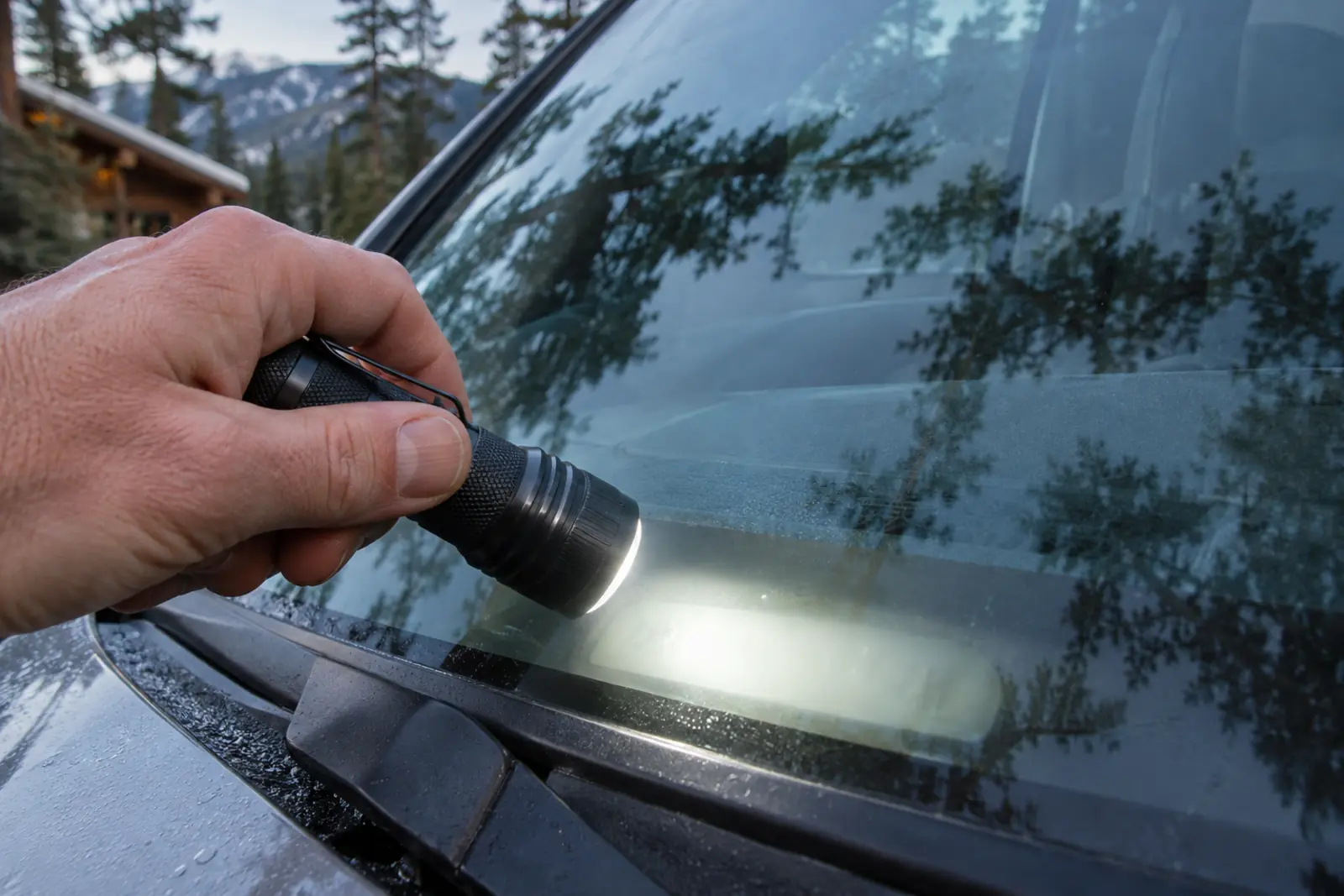
To find car parts by VIN, enter your 17-character VIN into a parts catalog or VIN decoder, read off the engine, trim, drivetrain and model year it returns, then search for the exact part number that catalog gives you. A VIN narrows the choices far better than year, make and model alone. The VIN is printed on the driver-side lower corner of the windshield, on the door jamb sticker, and on your registration and insurance card, so you rarely have to go far to find it.
Why year, make and model are not enough
A parts catalog that asks only for year, make and model has to guess. A pickup sold in one model year may have two engines, two axle ratios, two brake packages and a mid-year production change. Four-wheel drive and two-wheel drive versions share a name but use different front-end parts. A wrong guess means a return trip, a lost day and sometimes a restocking fee. In a place where the nearest large retailer may be a drive away, that mistake costs more than it would in a city.
Does the VIN tell you what parts fit?
Partly. The VIN does not list parts. It identifies the exact vehicle: who built it, which model and body style, which engine, which model year and which plant, plus a unique production number. A car part finder by VIN uses those details to match the vehicle against the maker's build data and show only parts listed for it. That is why a VIN lookup is more reliable than picking from a year, make and model menu, but it still depends on how accurate the catalog behind it is.
What the VIN tells you
Each position in the VIN has a job. Without memorizing the layout, it helps to know what a decoder pulls out of it. The 17-character format has been the standard for US vehicles since 1981, and the letters I, O and Q are never used, so they are not confused with 1 and 0.
| VIN section | What it identifies | Why it matters for parts |
|---|---|---|
| First three characters | Manufacturer and country of origin | Confirms the brand and market the vehicle was built for |
| Characters 4 to 8 | Model, body style, engine and restraint details | Narrows engine size, trim level and safety equipment |
| Ninth character | Check digit | Helps catch a mistyped VIN |
| Tenth character | Model year | Separates model years that look identical |
| Eleventh character | Assembly plant | Some parts differ by plant |
| Last six characters | Production sequence number | Used for mid-year cutoffs and recalls |
Two details are worth knowing. Position 8 often indicates the engine type, which is why a decoder can tell a 4-cylinder from a V6 in the same model. And the check digit is required on vehicles sold in North America, but it is only a typo filter: roughly 1 in 11 wrong VINs still pass the check, so a decoder that accepts your VIN has not proved you typed it correctly. Model year letters also restart in 2010, so a vehicle with an A in the tenth position can be a 2010, not a 1980 (Wikipedia, Vehicle identification number).
Step by step: from VIN to the right part
- Write the VIN down exactly. Photograph it from the dash and the door jamb and compare the two. Letters I, O and Q are not used in VINs, so a character that looks like one is a number.
- Decode it first. Run the VIN through a free decoder and compare the result with what you know about the vehicle: engine size, drivetrain, body style and model year. If the decoder disagrees with what is under your hood, recheck the VIN before ordering anything.
- Find the part number. Dealers can look up the OEM part number from your VIN. Retail sites and catalogs also let you enter it. Note the number, then search for it directly.
- Check the build date. The door jamb sticker shows the month and year of manufacture. When a catalog says a part fits "built before 06/xx" or "after", this is the date it means.
- Note options. Drivetrain, tow package, brake package and engine code matter. If the catalog asks a question you cannot answer, look at the old part or the build sheet.
- Compare the old part. Before you pay, look at the removed part beside photos and measurements in the listing. Count mounting points, connector pins and bolt holes.
- Cross-check interchange. Different brands may list the same part number as an equal. A reputable seller can confirm interchange for you.
- Read the return terms. Some parts carry a refundable deposit and many have warranty conditions; see what a core charge is and how returns and warranties work.
Free tools worth using
You do not have to pay anything to check basic facts. The National Highway Traffic Safety Administration runs a free recall lookup at nhtsa.gov/recalls that uses your VIN. Parts catalogs at the big national retailers and at dealer websites are free to search. A VIN decoder will confirm engine, plant and model year before you buy. If a recall exists for the part you are replacing, the repair may be free through a dealer, so check that before paying for the fix.
What a VIN lookup will not tell you
- Earlier repairs. If a previous owner swapped an alternator, axle or brake kit, the factory data for your VIN no longer describes what is on the car.
- Aftermarket changes. Lift kits, larger tires, tow hitches and engine swaps change which parts fit, and the VIN knows nothing about them.
- Wear and condition. The VIN says what the part should be, not whether it has failed. Diagnose first.
- Climate fit. A part that fits is not always the right part for the conditions. At Grand County altitude and winter temperatures, extra checks matter; see how altitude affects engine cooling and tire pressure.
Trouble spots that catch people
- Brakes. Rotor diameter, caliper style and pad shape vary by trim. Sort this out before you order, then read the guide to brakes on long descents for what to buy.
- Batteries. Group size and terminal position decide fit. The best choice for a cold climate is a separate decision; see car batteries in extreme cold.
- Sensors and modules. Software versions and build dates matter. Check whether the part must be programmed to the vehicle after installation.
- Wiper blades and filters. Easy to get wrong because trim levels differ. Lengths are often different on the driver and passenger sides. For winter use, see winter wipers and washer fluid.
- Aftermarket parts for older vehicles. Parts may have been superseded by newer numbers. Ask for the current number when a catalog shows an old one.
If you are buying several parts ahead of winter, the winter car care checklist for mountain drivers lists what is worth replacing before the first storm.
When you buy used or from an unfamiliar seller
Salvage yards and online sellers list parts by the donor vehicle. Ask for the donor's VIN and mileage, then compare engine code and options with yours. Do not rely on the listing's headline alone. For higher-value items such as engines and transmissions, the guide to buying a used engine or transmission goes into more detail. Be careful with sellers that ask you to pay outside the normal checkout; see how to spot fake auto parts websites.
If you are comparing part types, the guide to OEM, aftermarket, used and remanufactured parts explains which is best for each job.
Privacy note
A VIN is not secret, and it appears in many public records. Even so, share it only with sellers you trust, and never send a photo of your registration or insurance card to someone you have only met through a listing.
Frequently Asked Questions
Where do I find my VIN?
Look at the lower driver-side corner of the windshield, the sticker on the driver-side door jamb, and your registration, title or insurance card. The same 17 characters should appear in each place.
Can I find a part with the engine code instead?
Sometimes, but the VIN is usually better because it also reveals the build date and options. If you use an engine code, confirm it against the VIN, since some models offer similar engines with different parts.
Does the VIN guarantee the part will fit?
It improves the odds a lot, but it is not a guarantee. Mid-year changes, aftermarket modifications and earlier repairs can all mean the old part differs from the listing. Compare the old part with the new one before installing.
Can I check car parts by VIN number for free in the USA?
Yes. Most national retailers, dealer parts sites and online catalogs let you enter a VIN at no charge, and the NHTSA recall lookup is free. Paid vehicle history reports are not needed to match a part.
What if a catalog does not accept my VIN?
Check that you typed it correctly, then try another catalog or call a dealer parts department, which can look up the original part number. Vehicles built before 1981 do not follow the 17-character format, so some systems cannot decode them.
Is it safe to give my VIN to a parts seller?
A VIN alone is low risk, and legitimate sellers need it. Avoid sending registration papers or personal documents, and be cautious if a seller asks for more than the VIN to quote a part.