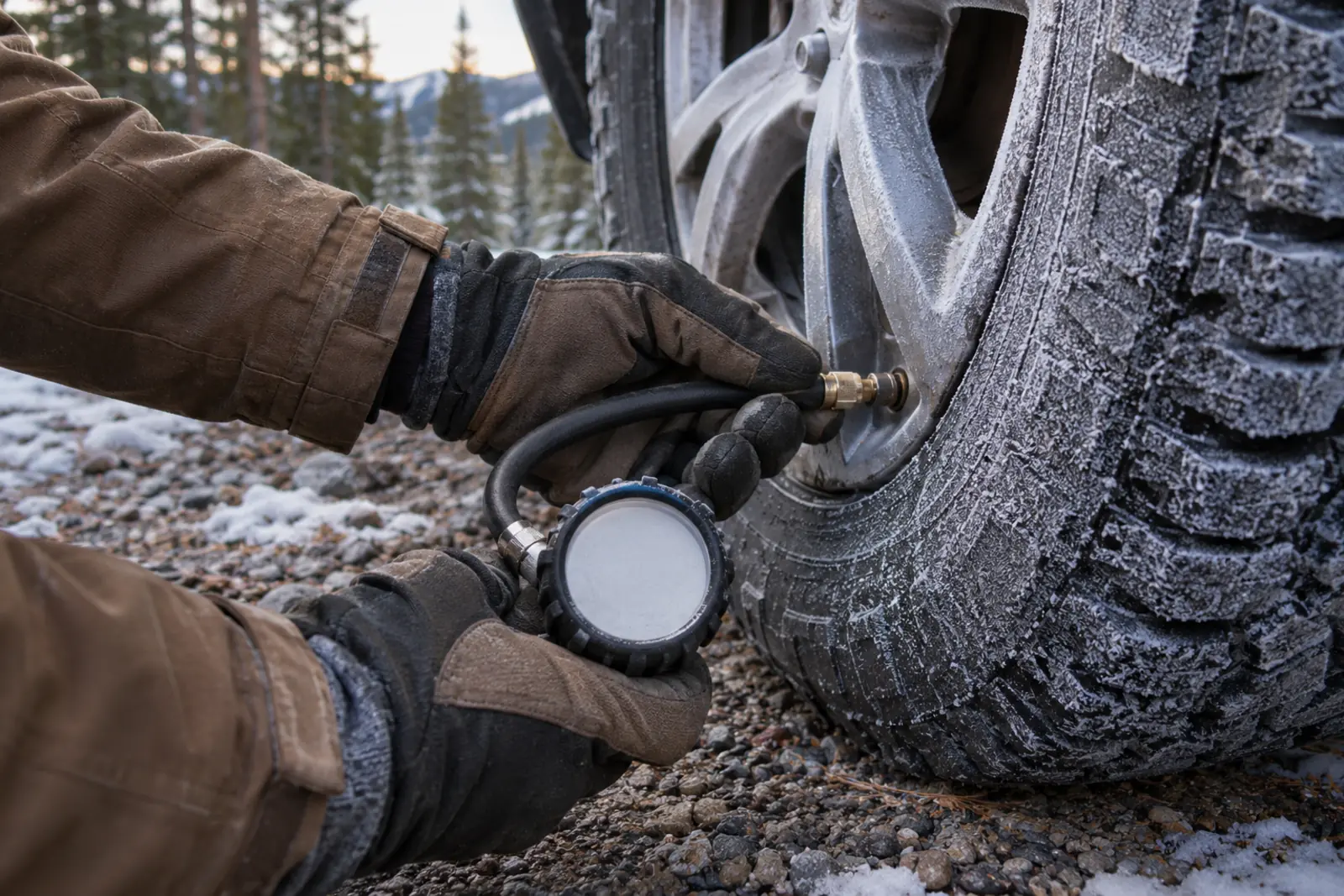
Tire pressure drops about 1 psi for every 10°F fall in air temperature, according to AAA. Over a Granby autumn that swings from a 60°F afternoon to a 10°F morning, that adds up to roughly 5 psi lost without a single leak. The fix is to check the tires cold, inflate to the number on the door placard (not the sidewall), and recheck after each big temperature swing.
Why tire pressure falls when it gets cold
A tire is a sealed volume of air. Cold air contracts, so the same amount of air pushes on the tire walls with less force. Nothing has escaped; the pressure simply follows the temperature. The effect reverses on a warm day, which is why the gauge reading can wander by several pounds over one week in the mountains.
Two things make mountain drivers notice it more. Daily temperature swings in Grand County are large, so a tire filled on a sunny afternoon can read low the next dawn. And the air reaches the tires slowly: a car parked outside overnight is fully cold-soaked by morning, while one kept in a heated garage and then driven out is not yet at outdoor temperature.
How much pressure drops per 10 degrees
The rule of thumb is about 1 psi per 10°F, as AAA's explanation of temperature and tire pressure puts it. The table applies that rule to a tire set at 35 psi at 70°F. The numbers are estimates, not gauge readings.
| Outside temperature | Drop from 70°F | Approximate pressure |
|---|---|---|
| 60°F | 10°F | 34 psi |
| 40°F | 30°F | 32 psi |
| 20°F | 50°F | 30 psi |
| 0°F | 70°F | 28 psi |
A tire that starts a little low in the fall has less margin. A tire already at 31 psi on a 35 psi placard can be near 26 psi by the first hard freeze.
Where to find the correct psi
Use the vehicle placard, not the number molded into the tire. NHTSA says the Tire and Loading Information label is on the driver's side door edge or post, and the same figure is in the owner's manual. The sidewall number is the tire's maximum, not the pressure for your car.
- Front and rear can differ. Many placards list separate pressures; follow both.
- Spare tire. The placard often lists a spare pressure too, and it is the one most often forgotten.
- Replacement tires. If the tire size is not the original, the placard is still the starting point. Ask the tire shop whether the size or load rating calls for a different number.
Check tires cold: when and how to measure
NHTSA defines cold as a car that has not been driven for at least three hours, and recommends checking all tires, spare included, at least once a month. Driving heats the air inside, which raises the reading and hides a shortfall.
- Check in the morning before the first drive, or after the car has sat for three hours.
- Press a reliable gauge straight onto the valve stem and read it quickly.
- Compare each tire with the placard, not with the other tires.
- Add air to reach the placard figure. If the tire reads high because the car was just driven, do not let air out to hit the number.
- Recheck after a significant cold snap.
If the car has just been driven to a station, the readings are warm and will run higher than the cold figure, so use the station only for a rough top-up and recheck cold the next morning.
Filling in a warm garage, driving into the cold
Air added in a heated space reads accurately for that room but will drop once the car sits outside. If the garage is 60°F warmer than the street, the tire can lose about 6 psi after it cools. Where the car lives in a heated garage and goes out into deep cold, check again once the tires have been outside for a while and top up to the placard.
The TPMS warning light on a cold morning
The tire pressure monitoring light often appears on the first cold morning of the season. Under the federal standard (49 CFR 571.138), the system must warn the driver when a tire is 25 percent or more below the manufacturer's recommended cold pressure. For a 35 psi placard, that is around 26 psi.
A tire that was already low can cross that line when temperatures fall. The light is a late alarm: NHTSA notes that the system typically activates when a tire is already significantly underinflated, so a monthly manual check is still worth doing.
- If the light comes on, check all four tires cold and inflate to the placard.
- If it stays on after correct inflation and a short drive, a tire may have a slow leak or the sensor may need attention; a tire shop can read it.
- The owner's manual explains what a flashing or differently shaped warning means on your vehicle.
Altitude versus temperature: what really changes the reading
For a driver in Granby, temperature is the swing that matters. Gauges read pressure relative to the surrounding air, so elevation shifts the reading a little, but that effect is small next to a cold snap, and the placard figure is the target at any elevation. The guide to altitude, cooling and tire pressure covers the other effects of elevation on a car.
Winter tires and pressure
Winter tires follow the same rule: inflate to the placard unless the tire maker or a tire shop specifies something else for that tire. Do not lower pressure to "get more grip" in snow, and do not overinflate to compensate for the cold. Tire pressure is separate from the legal requirements for tread and equipment on mountain roads, which are explained in the Colorado traction law and winter tire guide. Tire pressure also belongs in the routine laid out in the winter car care checklist for mountain drivers.
Cold affects more than the tires. A weak battery is the other common first-freeze surprise, covered in the car battery cold weather guide.
Frequently Asked Questions
How much does tire pressure drop in cold weather?
About 1 psi for every 10°F drop in air temperature. A tire set at 35 psi on a 70°F afternoon can read near 30 psi when it is 20°F outside, with no leak involved.
What psi should I use in winter?
Use the pressure on the placard on the driver's side door edge or post, or in the owner's manual. Check it with the tires cold and add air when the reading is below it. Ignore the maximum number on the sidewall.
Why is my tire pressure light on when it is cold?
The system warns when a tire is about 25 percent below the recommended cold pressure. A tire that was slightly low can cross that line when the temperature drops. Check all four tires cold and inflate to the placard.
Should I overinflate my tires in winter?
No. Inflate to the placard pressure when the tires are cold. If the car sits in a heated garage and is then driven into deep cold, recheck after the tires have cooled outdoors and top up to the placard.
Do tires lose pressure faster at high altitude?
Elevation shifts the gauge reading only slightly; the larger change comes from temperature. A tire that keeps losing pressure over weeks has a leak, a bad valve or a damaged rim seal and should be inspected.